


Making skills visible, measurable, and actionable.
Skills are the currency of the 21st century.
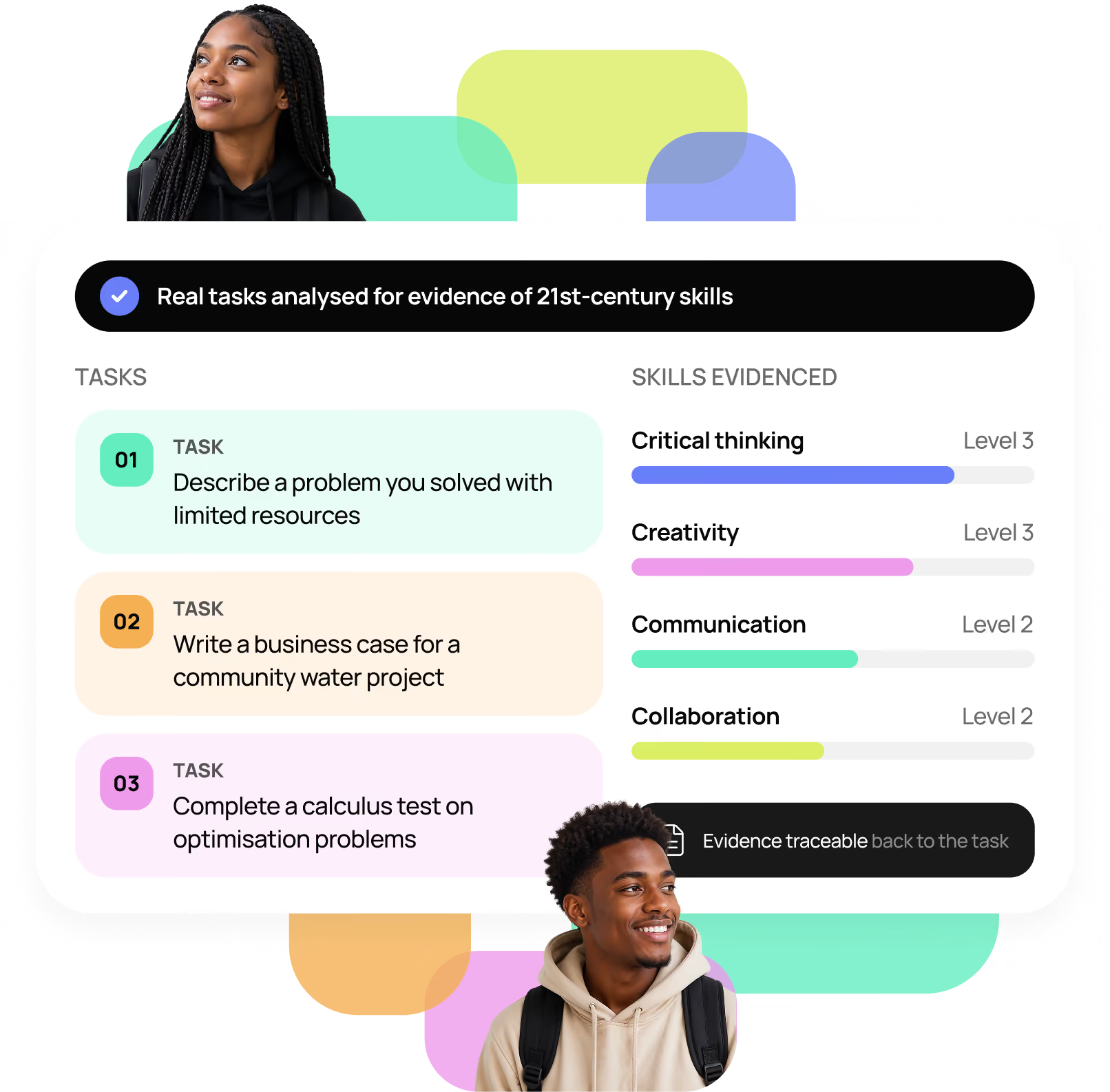
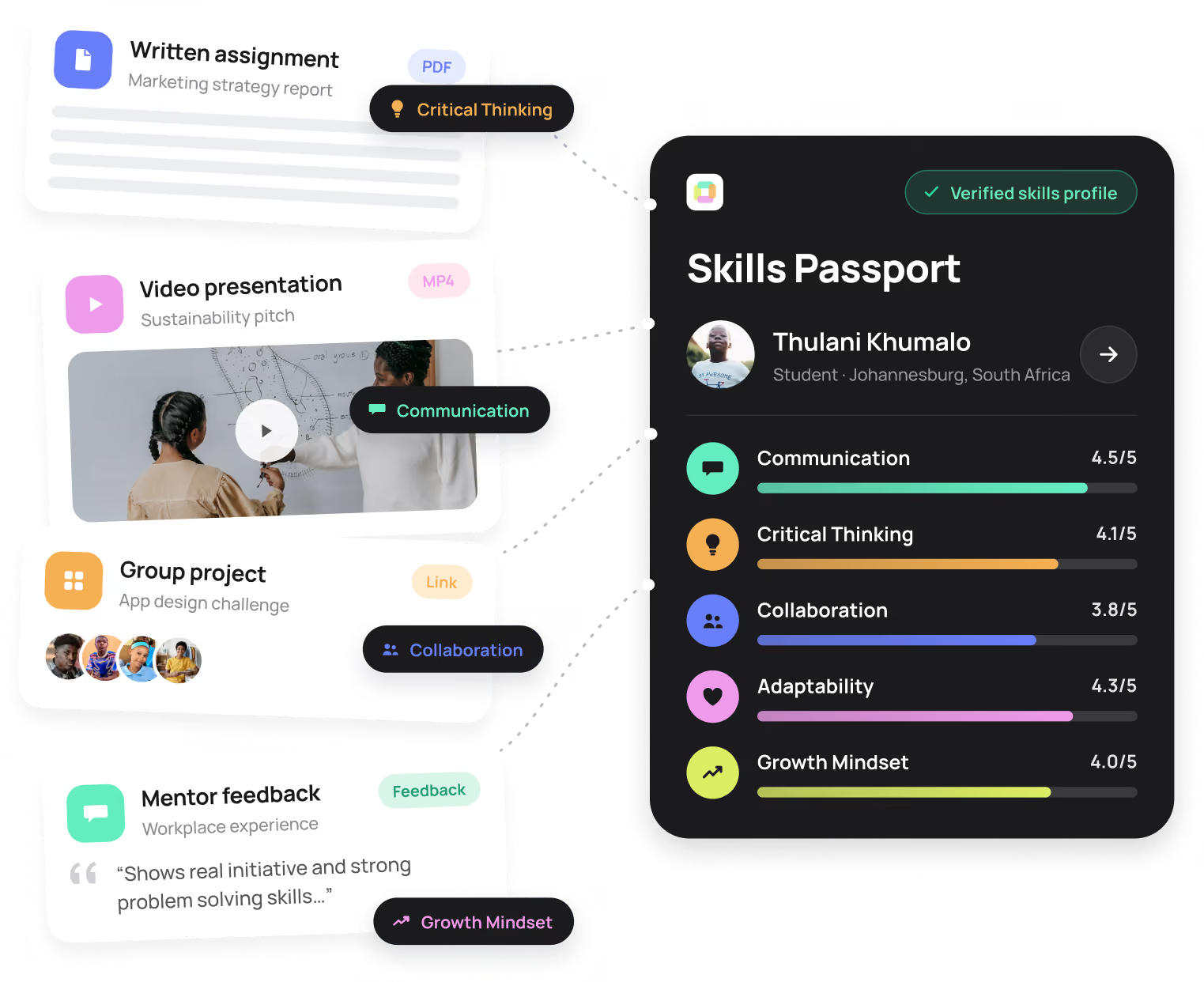
Skills Passport is a skills measurement platform that reads and interprets real evidence — from open-ended application responses and assessments to portfolios, programme responses and workplace tasks — and measures demonstrated skills consistently, comparably and at scale.
If skills matter, we need better ways to measure them.
As technology changes the world of work, durable human capabilities are becoming more important.
Yet many of the systems we use to recognise people and allocate opportunity still rely heavily on proxies such as qualifications, marks, CVs, years of experience and programme completion. These signals do not reliably show us what skills someone actually has.
The problem is not that these capabilities are absent. It is that we do not have reliable systems to surface and measure them quickly, consistently and comparably at scale.
Skills Passport creates that measurement layer.

Africa's young people have skills.
The missing layer is a reliable way to make those skills visible, measurable and actionable.


Built from inside South African education systems.
Skills Passport was developed by ThinkShift, an South African education systems-change and technology company with experience across learning, assessment, large-scale implementation and skills measurement.
That experience gives us a practical understanding of where skills are developed, how they are assessed, and where better evidence can improve decisions.

Learners reached

Teachers and officials trained

Education hubs established

South African provinces

Partners & Supporters





Mastercard Foundation EdTech Fellowship, Cohort IV




For years, my work at ThinkShift has focused on developing the capabilities…
But we kept confronting the same gap.
We could develop these capabilities, but we had no reliable way to measure what someone had actually demonstrated or carry that evidence forward into economic opportunity.
Skills Passport grew out of that problem.
If skills are becoming the currency of the 21st century, people need credible ways to show what they can do, and institutions and opportunity providers need better ways to recognise it.

Turn the work people already produce into measurable skills data.
Define what you want to measure
Start with the skills, attributes, competencies or outcomes that matter in your context.
Bring the evidence
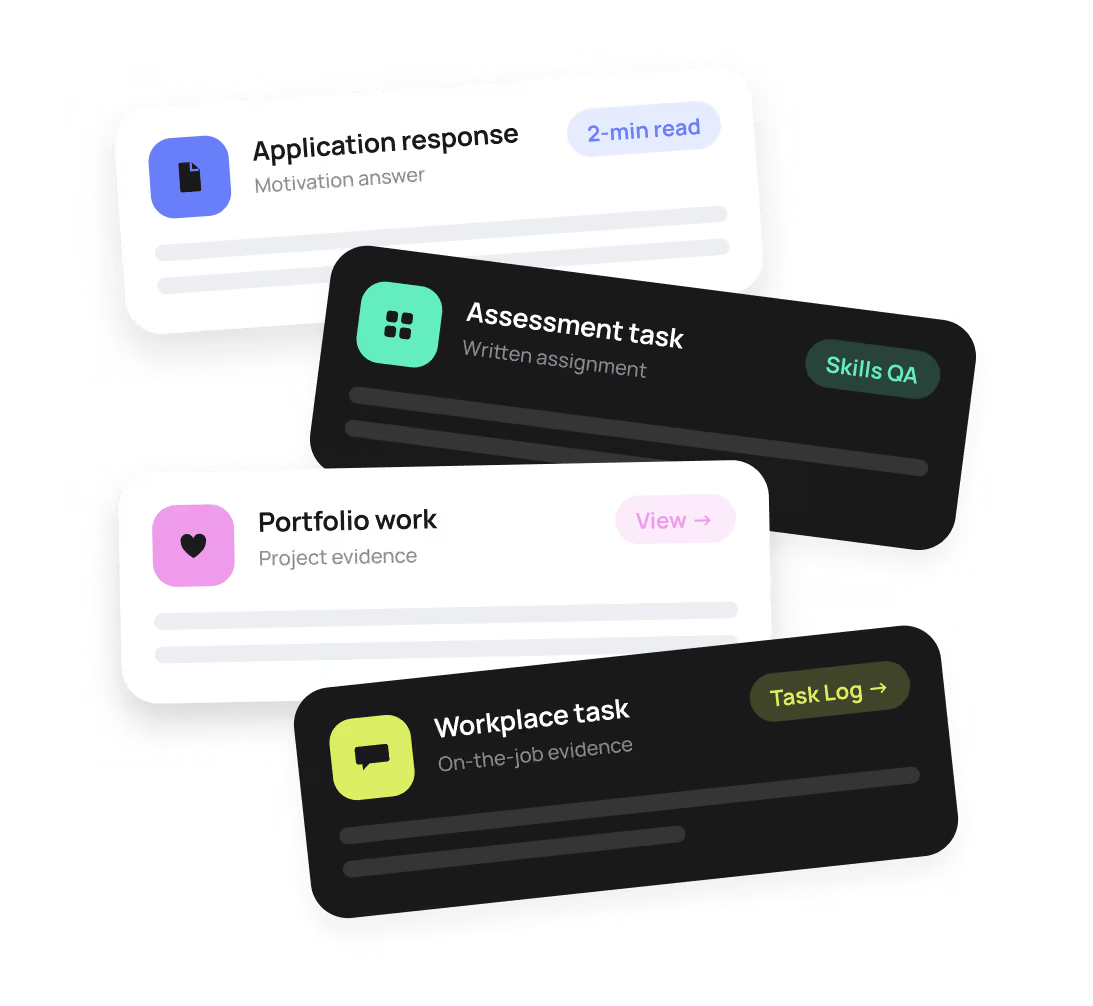
Use the work and responses people already produce — from assessments and portfolios to surveys, applications and workplace tasks.
Read, interpret and measure
Skills Passport analyses the evidence against defined criteria to identify and measure the skills and competencies demonstrated.
Act on the data
Use the results at individual, cohort, programme or institutional level to inform learning, development, quality, selection and opportunity.

The individual Skills Passport
At individual level, measured evidence can build into a longitudinal Skills Passport: a growing record of the skills someone demonstrates across different pieces of evidence and over time.

One measurement platform. Different measurement challenges.
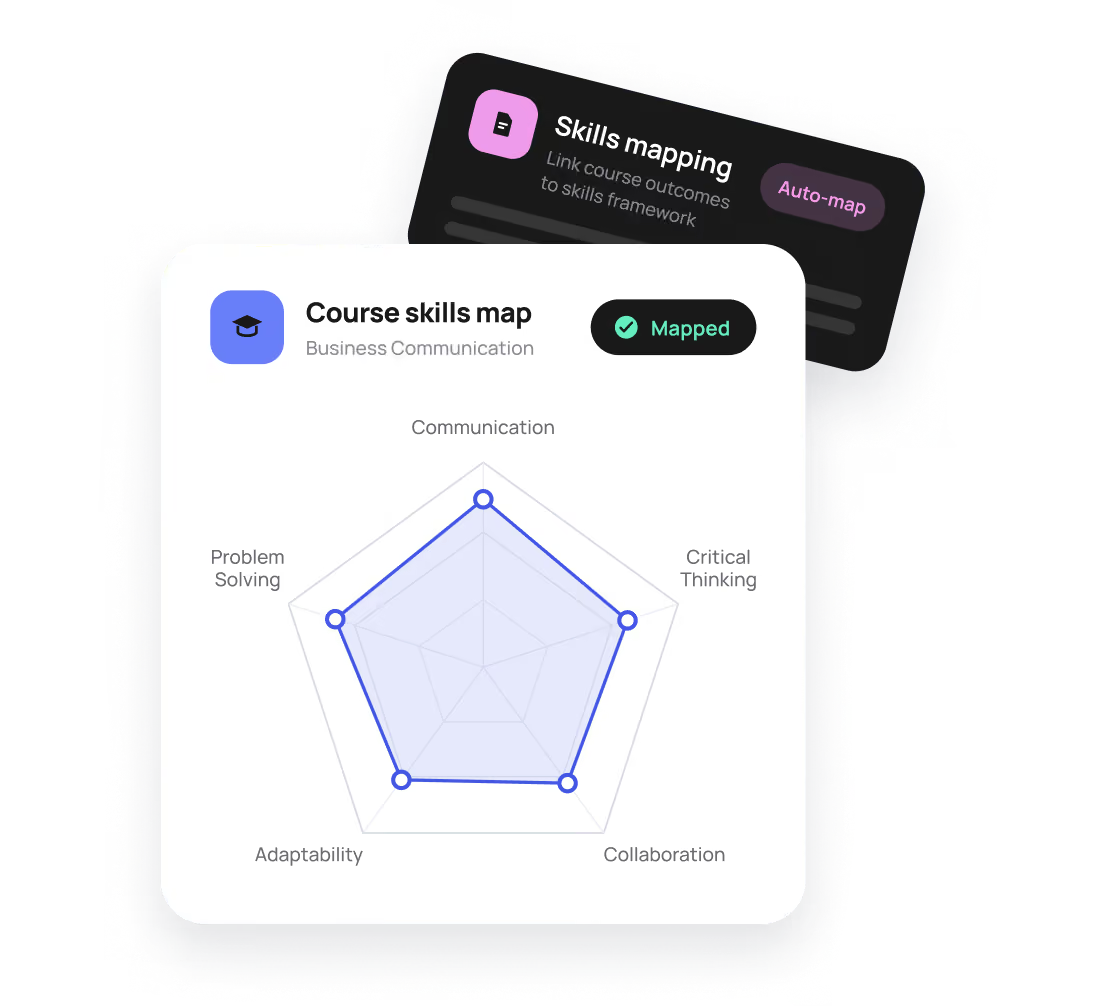
Turn your graduate attributes into measurable skills.
We help you translate the graduate attributes your institution targets into measurable skills and set up Skills Passport within your learning management system.
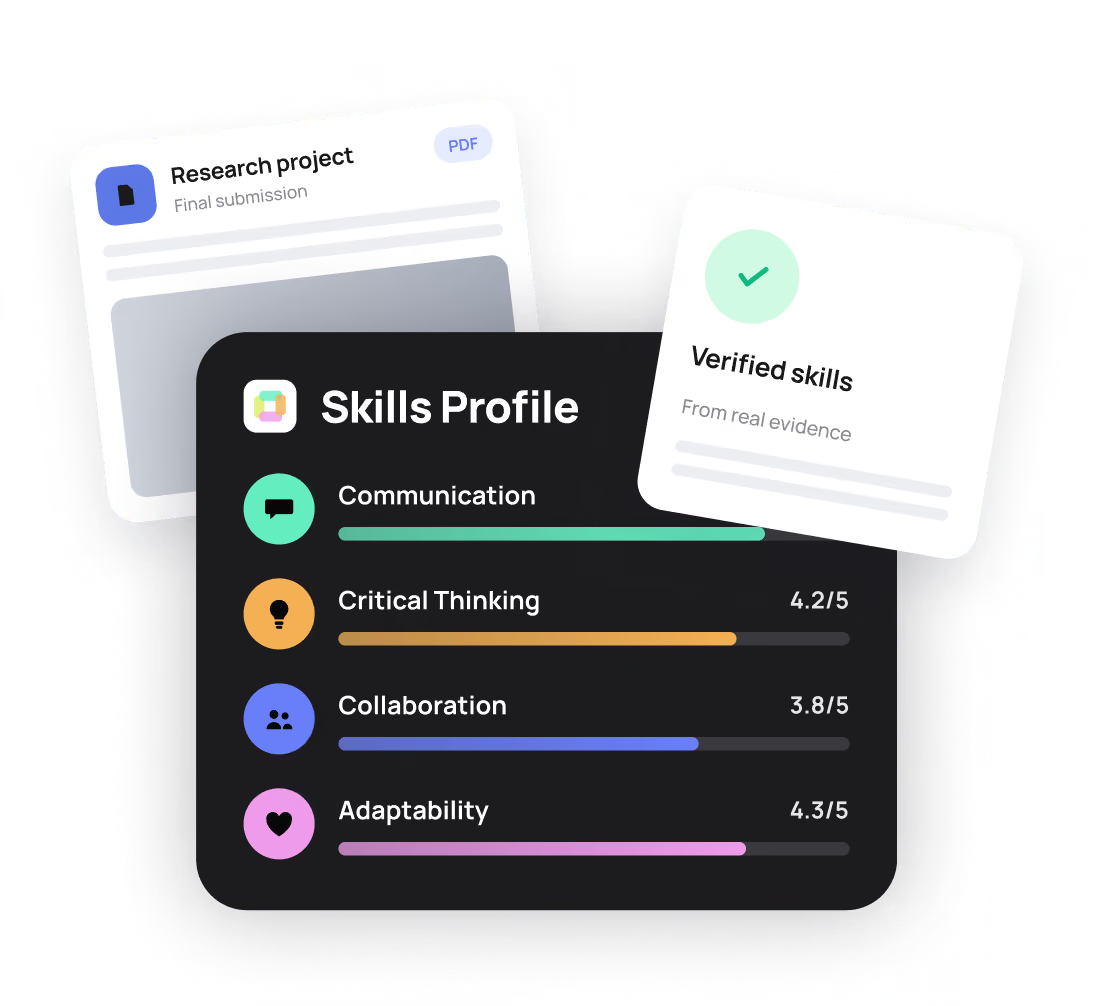
Use Skills Quality Assurance to understand whether your assessments give students meaningful opportunities to demonstrate those skills. Then use Skills Measure to score the evidence in student work and see what students actually demonstrate.
Turn the skills your programme targets into data you can act on.
We help you translate the skills you want to develop into measurable criteria and build Skills Passport into a format that suits your programme.
That could be an engagement tool, baseline and endline measurement, or assessment of the work and responses participants already produce.
Assess the skills you need, with less first-pass assessment time and cost.
You know the skills and attributes required for the opportunity. We help you turn them into defined assessment criteria and use Skills Passport to evaluate candidate evidence against them.
The platform reads application responses, assessment tasks and other relevant submissions, automating first-pass scoring and producing comparable results with supporting evidence for your reviewers.
What skills do you want to measure?
Tell us the skills you want to measure and the evidence you already have.

Know Your Edge: National Entrepreneurship Baseline
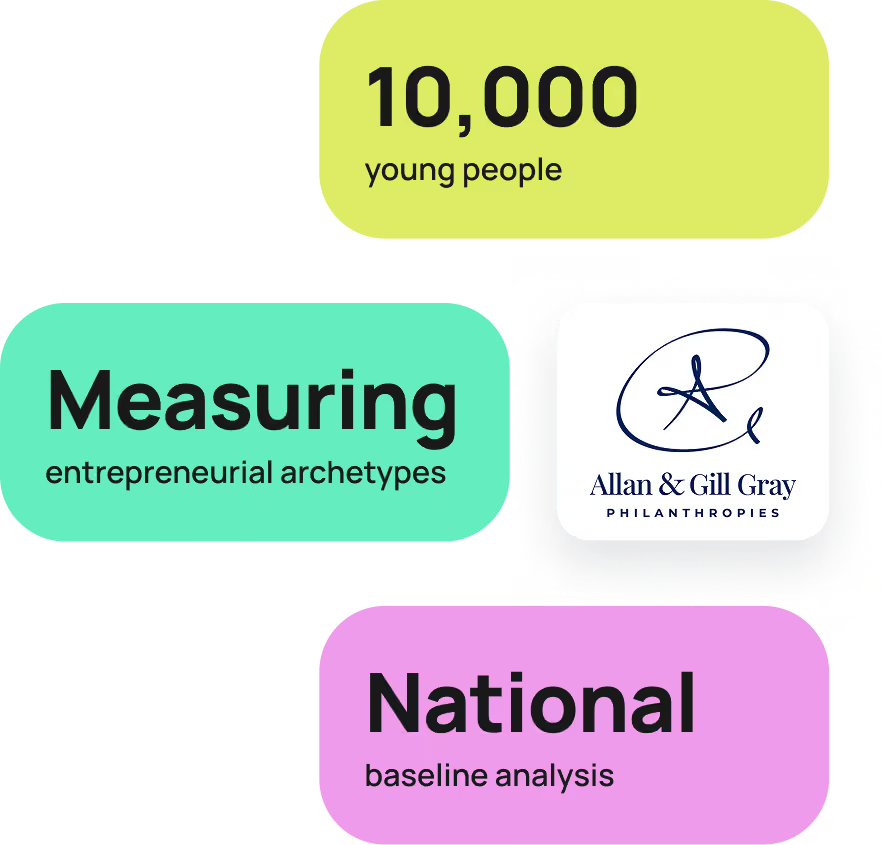
Skills Passport is currently the measurement engine behind Know Your Edge, a youth entrepreneurship survey developed by Allan & Gill Gray Philanthropies through Inspire Education. The short survey captures participant responses, assesses them against a defined entrepreneurial competency framework, and immediately returns an entrepreneurial archetype.
At an individual level, participants receive an accessible view of their entrepreneurial strengths. At an aggregate level, the data is beginning to build a broader picture of how young South Africans perceive their entrepreneurial competencies, creating useful insight for programme design, youth development and future measurement.
“ThinkShift is building a credible solution to an important challenge of how institutions and programmes can better understand, measure and make visible the capabilities young people develop.”
Nyakallo Merafe
Lead: Incubation & Programme Design
Allan & Gill Gray Philanthropies South Africa
Go deeper into the use case that matters to you.
Skills Passport for Higher Education
How Skills Passport connects graduate attributes, assessment quality and demonstrated student capability.

Skills Passport for Programmes and Funders
How Skills Passport measures the skills your programme targets at individual and cohort level.

Skills Passport for Selection
How evidence-backed skills measurement can support high-volume selection.

Skills Passport in Action
The Know Your Edge national entrepreneurship measurement deployment.

Start with a demo. Then test it on your own evidence.
Request a demo
See Skills Passport applied to a measurement challenge relevant to your organisation.
Free Proof of Value
Where there is a potential fit, we can run a bounded Proof of Value using evidence from your own institution, programme or selection process.
We test three practical questions:

Does Skills Passport reveal additional insight?
We compare the results with what your current data already tells you.

Is the result credible and traceable?
Every score links back to the evidence behind it, so your team can check it.

Is the information useful to the people who need to act on it?
We review the findings with the people who will use them to make decisions.
Deploy. We work with you to implement Skills Passport in your context.
See what Skills Passport can measure in your context.
Tell us the skills you want to measure and the evidence you already have.